
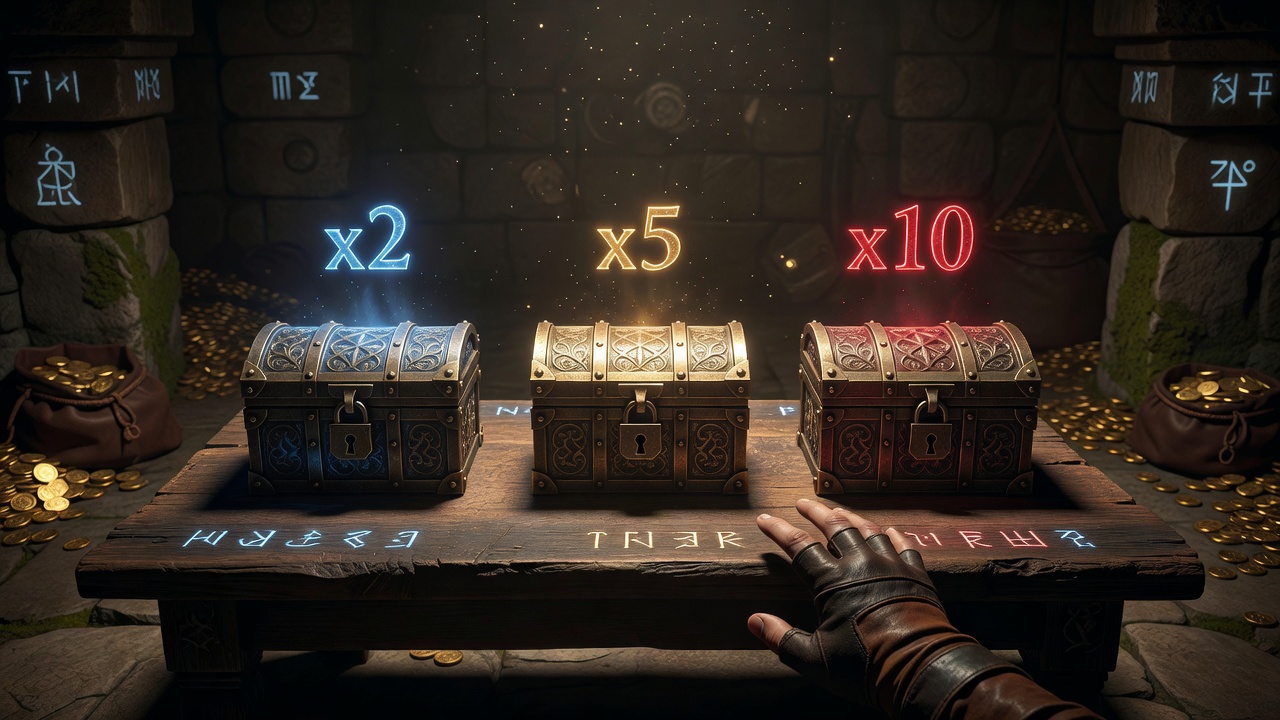
Three cells. Three coins. One decision point that repeats every round and quietly determines whether a session ends in profit or frustration. That's the entire premise of 3 Coin Treasures, and it's precisely why the game rewards players who understand its mechanics rather than those who click through it on autopilot. Strip away the visual polish and you're left with a compact probability puzzle disguised as a treasure hunt.
Most players approach it the way they'd approach any quick-round title: press a button, watch the outcome, repeat. That's a mistake. The structure of the game - three distinct cells, each carrying its own coin value and risk profile - means every choice has weight. Before diving into the finer points, it helps to see the mechanics in motion; a walkthrough on how to play 3 coin treasures shows how the cell selection process unfolds in real time and why timing your choices matters more than instinct alone. Once you've seen the flow, the rules that follow will make far more practical sense.
This 3 coin treasures guide covers everything from the foundational rules to the finer strategic decisions that separate casual play from calculated play. Whether you're new to the format or looking to sharpen an existing approach, the sections below break down exactly what you need to know.
What Is 3 Coin Treasures? Understanding the Core Concept
3 Coin Treasures belongs to a family of quick-decision games built around a simple visual metaphor: a small number of hidden compartments, each holding a reward of unknown size until revealed. The "three-cell" format is deliberate. It's small enough to grasp instantly, yet large enough to create genuine uncertainty about which cell holds the best outcome.
Origins and Purpose of the 3-Cell Format
The three-cell structure exists because it hits a psychological sweet spot. Two options feel like a coin flip - too simple to engage with strategically. Five or more options overwhelm short-round formats and slow the pace. Three cells give players enough variation to weigh outcomes without turning a quick round into a drawn-out decision tree.
Why Players Are Drawn to This Game Type
The appeal comes from immediacy. Each round resolves in seconds, but the anticipation before a reveal creates a disproportionately strong sense of engagement relative to the time invested. Players also appreciate that outcomes are visible and final - there's no ambiguity about what was won or lost once a cell is chosen.
How It Differs From Traditional Coin-Based Games
Unlike straightforward coin-flip mechanics, 3 Coin Treasures introduces asymmetry between cells. Values aren't evenly distributed, and that asymmetry is what creates room for actual strategic thinking rather than pure chance-based guessing.
- Three distinct cells, each with an independent reward value
- Fast round resolution, typically seconds per decision
- Visible, final outcomes with no hidden adjustment after selection
3 Coin Treasures Rules Explained Step by Step
Understanding the rules thoroughly is the difference between playing reactively and playing with intent. The mechanics are simple on the surface, but a few details often get overlooked by newer players.
Setting Up a Round
Each round begins with three closed cells presented in a row or grid, depending on the interface. Before any cell is revealed, the player commits a stake for that round. This stake determines the scale of potential rewards tied to each cell - higher stakes generally correspond to proportionally higher payouts, not better odds.
Selecting a Cell: What Actually Happens
Once a cell is chosen, its contents are revealed immediately. There's no sequence of partial reveals or hints beforehand - the outcome is determined at the moment of selection, not before it. This is a critical rule to internalize: no amount of hovering or hesitating changes the result, since the value assigned to each cell is fixed the instant the round starts.
Scoring, Multipliers, and Round Completion
Rewards are typically expressed as multipliers of the initial stake. A round completes the moment a cell is selected and its value is displayed. Some versions allow consecutive rounds to build toward a larger cumulative reward, while others treat each round as fully independent. Knowing which format you're playing matters for how you manage your stake across a session.
Common Rule Misunderstandings
New players sometimes assume that avoiding a previously "losing" cell increases their odds on the next round. It doesn't. Each round is an independent event, and prior outcomes carry no influence over future ones unless the specific version of the game explicitly states otherwise.
3 Coin Treasures Gameplay: Mechanics and Flow
Where the rules define what's possible, the gameplay defines how a session actually feels moment to moment. This section focuses on the practical experience of playing through multiple rounds.
Session Structure and Pacing
A typical session moves quickly - stake, select, reveal, repeat. This pacing is intentional and is part of what makes the format appealing for short bursts of play. There's little downtime between decisions, which keeps engagement high but also means players need to set clear limits before starting, since it's easy to lose track of how many rounds have passed.
Reading Visual and Value Cues
Some versions of the game include subtle visual indicators - color shifts, animation timing, or positional patterns - that experienced players learn to read, even though these cues don't alter underlying probabilities. Recognizing them helps with pacing decisions but shouldn't be mistaken for a way to predict outcomes.
Managing a Multi-Round Session
Consistency across rounds matters more than most players assume. Adjusting your stake wildly from round to round based on recent outcomes tends to erode a bankroll faster than maintaining a steady, pre-decided approach. This is one of the first practical lessons that separates disciplined play from impulsive play.
3 Coin Treasures Strategy: Maximizing Your Odds
Strategy in a three-cell format isn't about predicting which cell holds the best value - that's not knowable in advance. It's about managing stake size, session length, and decision consistency to put yourself in the best possible position over time.
Bankroll Management Before Anything Else
The single most impactful strategic decision happens before the first round even starts: deciding how much you're willing to commit to the session and sticking to it. Players who set a firm limit and treat it as non-negotiable consistently outperform those who adjust their budget mid-session based on emotion.
Stake Sizing Across Rounds
A flat-stake approach - betting the same amount every round regardless of recent results - tends to smooth out variance over a session. Some players prefer a gradual scaling method, increasing stakes slightly after wins and reducing them after losses, but this only works if the scaling rules are decided in advance and followed strictly.
Recognizing When to Stop
Every effective 3 coin treasures strategy includes an exit condition. This might be a target win amount, a maximum loss threshold, or simply a fixed number of rounds. The specific number matters less than the discipline to actually stop once the condition is met.
Avoiding Common Strategic Errors
The most frequent mistake is chasing losses by increasing stakes after a string of poor outcomes, hoping to recover quickly. This inverts the logic of sound bankroll management and typically accelerates losses rather than reversing them.
- Set a session budget before playing and treat it as fixed
- Use consistent stake sizing rather than emotional adjustments
- Define a clear stopping point in advance
How to Play 3 Coin Treasures: A Practical Walkthrough
With the rules and strategy in place, here's how a typical playthrough unfolds from start to finish, tying the earlier sections together into a single practical sequence.
Step One: Setting Your Stake
Decide your stake for the round based on your overall session budget, not on how the previous round went. This keeps decision-making rational rather than reactive.
Step Two: Choosing a Cell
Select one of the three cells. There's no mechanical advantage to choosing left, center, or right - the value distribution is independent of position in a properly balanced version of the game.
Step Three: Reading the Outcome
Once revealed, the result is final for that round. Take a moment to register the outcome before moving to the next stake decision - rushing straight into another round without pausing is a common source of the impulsive stake increases mentioned earlier.
Frequently Asked Questions
Is there a way to predict which cell will have the best value?
No. Cell values are assigned independently each round, and no pattern from previous rounds carries over. Any perceived pattern is coincidental rather than predictive.
Does stake size affect my odds of winning?
Stake size affects the scale of your potential reward, not your probability of selecting the better cell. Odds remain constant regardless of how much you commit per round.
Can I improve my results with a specific betting pattern?
Betting patterns can help manage your bankroll and reduce variance, but they don't change the underlying probability of any given cell. Consistency protects your budget more than it improves your odds.
How long should a typical session last?
That depends on your personal budget and goals, but setting a fixed number of rounds or a time limit before you start is more effective than deciding in the moment. Most disciplined players cap sessions well before fatigue or frustration sets in.
Is the three-cell format harder to strategize around than games with more options?
It's actually simpler in some respects, since fewer options mean fewer variables to track. The strategic depth comes from stake management and session discipline rather than from analyzing complex option sets.
What's the biggest mistake new players make?
Increasing stakes after a loss to try to recover quickly. This reverses sound bankroll logic and tends to compound losses rather than offset them.